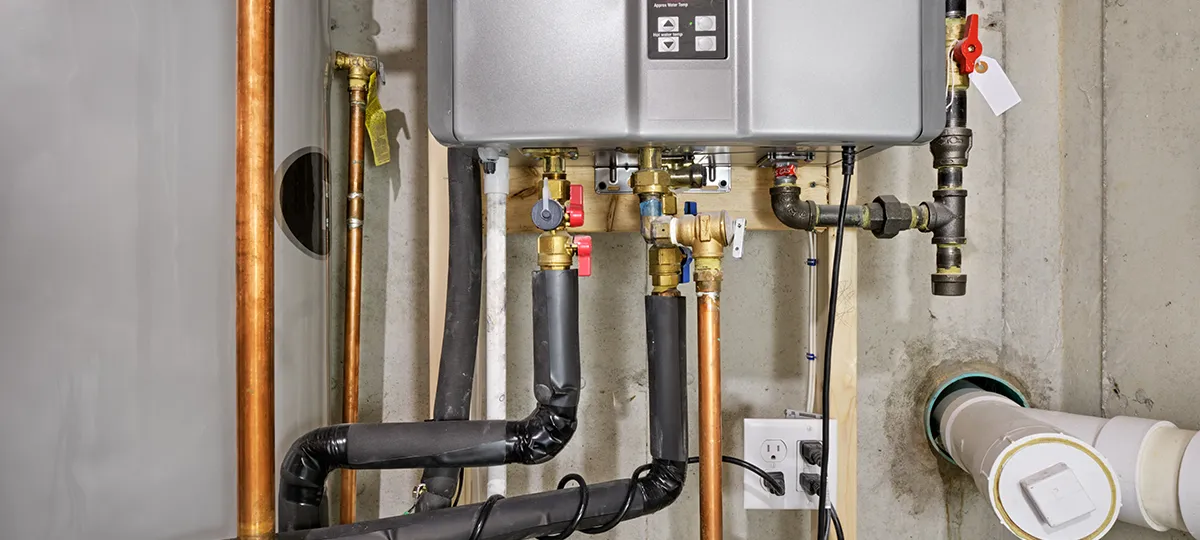
When weighing the tankless vs traditional water heater pros and cons, both systems offer advantages depending on your household’s needs. Tankless units can reduce standby energy losses and often have longer service lives. Traditional tank heaters generally cost less upfront and may be simpler to install in homes with existing storage-tank systems.
However, choosing the right water heater involves more than comparing purchase prices. Installation requirements, energy efficiency, peak hot-water demand, and ongoing maintenance all affect long-term value.
We help Gastonia homeowners compare these options based on their plumbing systems and daily routines. We’ll explain how each heater operates, what installation may require, and which system can reliably meet your household’s hot-water needs.
Tankless vs Traditional Water Heater Pros and Cons
When you’re deciding between a tankless and traditional storage-tank water heater, you’re comparing two different methods of heating water.
A traditional water heater stores hot water in an insulated tank, commonly holding between 30 and 80 gallons. The heating system maintains that water near the thermostat’s set temperature so it’s available when needed.
A tankless water heater heats water as it flows through the unit. Instead of storing a large supply, it responds to demand when someone opens a hot-water fixture.
Both systems can provide reliable hot water, but their installation requirements, operating costs, and available capacity differ.
According to the U.S. Department of Energy, demand water heaters can be 24–34% more energy efficient than conventional storage-tank models in households using 41 gallons or less of hot water daily. However, actual savings depend on the equipment, household usage, and energy source.
Traditional water heaters generally have lower upfront costs. Replacing an existing tank with a similar model may also require fewer plumbing, gas, or electrical modifications.
Tankless systems often have higher installation costs, especially when gas-line, venting, or electrical upgrades are necessary. However, their compact design and reduced standby losses can provide long-term benefits.
Understanding the tankless vs traditional water heater pros and cons helps homeowners compare installation costs, energy use, and expected service life.
When recommending equipment, our licensed plumbers evaluate peak hot-water demand, available fuel or electrical capacity, and installation requirements. This helps determine which system can meet your needs without unnecessary upgrades.
How Tankless and Tank Water Heaters Work
A traditional tank water heater stores heated water in an insulated cylinder. Cold water enters the tank, while a gas burner or electric heating element raises the water temperature to the thermostat setting.
As hot water leaves through a faucet or appliance, cold water replaces it. The heating system then operates as needed to restore the stored water’s temperature.
This makes the tankless vs traditional water heater pros and cons much easier to judge.
A tankless water heater operates differently. When a hot-water fixture opens, a flow sensor activates the heating system. Water passes through a heat exchanger, where a gas burner or electric heating element raises its temperature.
However, tankless heaters don’t necessarily deliver hot water to faucets immediately. The system may require startup time, and heated water must still travel through the home’s piping.
The U.S. Department of Energy explains that gas tankless water heaters must be sized according to maximum simultaneous flow and the required temperature rise. Both factors affect how much hot water the unit can deliver.
Traditional tanks can supply water from their stored capacity until the available hot water is depleted. Tankless systems can continue heating water as long as demand stays within their rated capacity.
Lifespan is another important consideration. Traditional storage heaters often last approximately 10–15 years, while tankless units may last 20 years or longer with appropriate care. However, actual service life varies by model, water quality, usage, and maintenance.
Regular tankless water heater maintenance helps manage mineral buildup and maintain heat exchanger performance. In homes with hard water, a whole-house water softener may also reduce scale formation.
When reviewing the tankless vs traditional water heater pros and cons from a longevity standpoint, consider maintenance requirements alongside expected equipment lifespan.
Our plumbers evaluate these factors to help homeowners choose systems that fit their daily hot-water needs.
Energy Efficiency and Operating Costs
Standby heat loss is an important difference between traditional storage tanks and tankless water heaters.
A conventional tank stores heated water throughout the day. Although insulation reduces heat loss, some energy is still required to maintain the stored water’s temperature.
Tankless systems avoid most storage-related standby losses because they heat water on demand. However, certain models may still consume small amounts of energy for electronic controls, freeze protection, or recirculation equipment.
That gap is where the tankless vs traditional water heater pros and cons hit your monthly bill.
When comparing water heaters, it’s important to consider their Uniform Energy Factor (UEF). This efficiency rating reflects performance under standardized testing conditions. Higher UEF ratings generally indicate greater efficiency within comparable equipment categories and usage profiles.
However, not every storage-tank heater has lower efficiency than every tankless model. For example, heat pump water heaters use electricity to transfer heat rather than generating it directly through resistance elements.
Homeowners comparing a heat pump water heater vs tankless may find that heat pump technology offers significant efficiency advantages, depending on installation conditions and energy costs.
Fuel prices also matter. A highly efficient gas heater may have different operating costs than an electric model, depending on local utility rates.
What Shapes Your Monthly Utility Cost
Higher efficiency doesn’t automatically guarantee the lowest total ownership cost. Installation expenses, utility rates, water consumption, and ongoing maintenance all affect long-term savings.
Tankless systems can reduce energy losses associated with storing hot water. However, their higher purchase and installation costs may take time to recover through lower operating expenses.
Traditional tanks may cost less initially, particularly when replacing an existing unit without major modifications.
Household usage also influences performance. If several showers or appliances need hot water simultaneously, a tankless system must provide enough flow at the required temperature rise.
If demand exceeds its rated output, the water temperature may drop or the unit may limit flow, depending on its controls.
Traditional tanks can handle substantial short-term demand from stored hot water, but their supply is limited until the heater recovers.
Evaluating the tankless vs traditional water heater pros and cons through your family’s actual usage patterns helps determine which system offers the best combination of cost and performance.
Homeowners replacing an aging unit should also consider water heater repair versus replacement costs. Repairing a relatively new heater may be more economical than switching systems immediately.
When assessing your home in Gastonia, we review peak demand, equipment condition, fuel availability, and potential installation upgrades. This helps identify a solution that matches your budget and hot-water requirements.
Tankless vs Traditional Tank: Side-by-Side Comparison
| Feature | Tankless | Traditional Tank |
| Upfront cost | Generally higher | Generally lower |
| Installation | May require gas, electrical, or venting upgrades | Often simpler when replacing a similar tank |
| Efficiency / UEF | Low standby losses; varies by model | Varies significantly; heat pump tanks can be highly efficient |
| Hot-water supply | Continuous within rated flow capacity | Limited by stored volume and recovery rate |
| Typical lifespan | Often 20+ years | Often 10–15 years |
| Maintenance | Scale management and manufacturer-recommended servicing | Periodic flushing and anode rod inspection, when applicable |
| Best fit | Homes prioritizing compact size and on-demand heating | Homes prioritizing lower upfront costs and stored capacity |
Get a Professional Assessment from Superior Plumbing and Drains
Choosing the right water heater requires more than comparing equipment specifications. At Superior Plumbing & Drains, we help Gastonia homeowners select systems that match their hot-water needs, budget, and existing plumbing infrastructure.
Our licensed plumbers assess your current water heater, discuss your household’s usage, and evaluate installation requirements. Whether you’re considering a tankless upgrade or replacing a traditional storage tank, we’ll explain your options and provide a detailed estimate before work begins.
Understanding the tankless vs traditional water heater pros and cons is the first step toward choosing reliable equipment for your home. Our team can help you make that decision with confidence.
We’re licensed and insured, and we stand behind our installations with a workmanship warranty. Contact Superior Plumbing & Drains to schedule an in-home water heater assessment in Gastonia, NC.
Frequently Asked Questions
Which is better, tankless or traditional water heater?
Neither option is universally better. Tankless systems offer compact installation, reduced standby losses, and potentially longer service life. Traditional tanks generally cost less upfront and provide a stored supply of hot water. The right choice depends on your household’s demand, available infrastructure, and budget.
What are the tankless vs traditional water heater pros and cons?
Tankless systems heat water on demand, reduce standby losses, and often last longer. However, they generally cost more upfront and may require gas, electrical, or venting upgrades. Traditional tanks are typically less expensive to install and provide stored hot water, but their capacity is limited. Both systems require maintenance, and efficiency varies by model.
Can a tankless water heater replace my existing traditional tank?
Yes. Many homes can accommodate a tankless replacement, although modifications may be necessary. Gas models may require additional fuel capacity or different venting. Electric tankless systems may need substantial electrical capacity. A licensed plumber can evaluate your existing setup and recommend the appropriate installation.
How do I know which water heater size is right for my home?
Tankless systems are sized using peak hot-water flow and the required temperature rise. Traditional tanks are sized using storage capacity and first-hour delivery ratings. Your fixture count, household routines, and incoming water temperature all influence the choice. Our plumbers evaluate these factors to recommend suitable equipment.
More Solutions
Why you need our superior services
-
 Thank you to both Scott and Brendon. They did a great job taking care of my issue. In addition, they went the extra mile to ensure things were work as they should and planned a follow up the next day to ensure everything is still good. I’ve been using Superior Plumbing for over 8 years. I would highly recommend Tim and his team because they care about great customer satisfaction as well as the community!!
-
When I needed a plumber due to a water issue at my home, Superior was the only company who not only responded with the quickest appointment time but called to let me know that due to a cancellation they were able to come even sooner. I especially appreciated the text message I received prior to the technician arriving, showing me his picture as well as his name. Walker, the technician, was professional, highly knowledgeable, and …Read All Reviews
-
Thank you Superior for such prompt, reasonable, professional service when we were without water. You are worthy of your name! We will be sharing our experience at Superior with friends that may need plumbing or well services in the future.
-
We discovered a slow water line leak in our home that was starting to damage our flooring so we needed help right away. I did not have prior experience with Superior Plumbing & Drains in the past, but reached out to them for help. They were able to schedule an appointment with me quickly. The responding Technician, Walker, was very professional and courteous and took the time to explain the problem and repair to …Read All Reviews
-
I had an emergency plumbing situation in my short-term rental & Superior Plumbing went above and beyond to help me out in a time pinch. The staff was KIND, HONEST, & thorough, without price gouging! I would HIGHLY recommend to anyone!
-
They were able to respond quickly when our water heater quit working. One of their plumbers came to the house, inspected heater, recommended replacement and explained clearly why he was recommending replacement. He then gave options of different prices and types of heaters. Once we made our choice they completed the work the next day. I would recommend this company without a question.


Superior Solutions for every drain In Charlotte, NC and surrounding areas.
We provide family-oriented plumbing solutions for all your needs in Charlotte, NC, and surrounding areas. From drain cleaning and plumbing repairs to water heaters, jetting, and filtration systems, our team is available 24/7 to assist you.
 For immediate service, call 7047656855.


Budget-friendly financing for your plumbing needs