Tankless vs Traditional Water Heater Pros and Cons

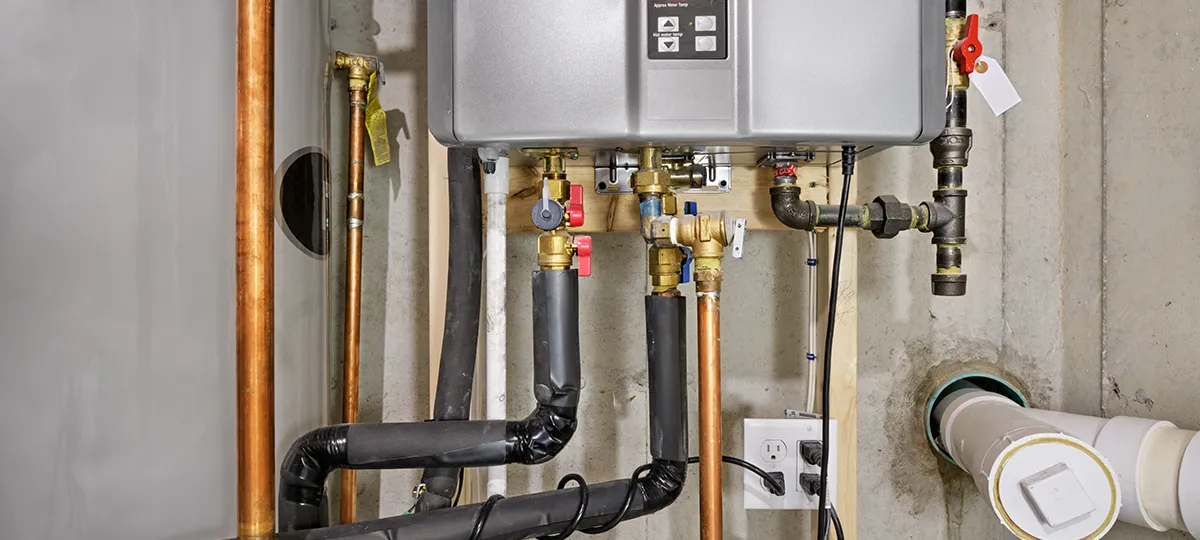
When weighing the tankless vs traditional water heater pros and cons, tankless units win on energy savings and longevity for most homes. Tank-style heaters still make sense when simpler installation matters more. The choice isn’t academic. Pick wrong, and you’ll overpay on utility bills for years or face early replacement. At stake is comfort during cold mornings and whether your next water heater lasts fifteen years or needs frequent service calls. We help Gastonia homeowners compare how each system works. You’ll learn what each demands from your plumbing and fuel lines. We’ll show you which option fits your household’s hot-water needs and home layout so you can decide with confidence before we ever touch a wrench.
Tankless vs Traditional Water Heater Pros and Cons
When you’re deciding between a tankless or traditional storage-tank water heater, you’re choosing between two fundamentally different approaches. A traditional tank heater keeps 30 to 80 gallons of water hot and ready whenever you turn on a faucet. A tankless system, also called an on-demand heater, fires up only when you call for hot water. It heats the water as it flows through the unit. Both do the same job—delivering hot water to your fixtures. But how they work, what they cost to run, and where they fit into your home vary dramatically.
For authoritative guidance, consult Tankless Gas Water Heater Performance – U.S. Department of Energy.
Tankless gas water heaters save approximately 33% on hot water heating compared to conventional storage tank models. That efficiency comes from eliminating standby heat loss. Standby loss is the energy wasted keeping a full tank hot when no one is using it. Traditional tanks, on the other hand, are often simpler to install in an existing home. They can deliver high volumes of hot water simultaneously to multiple fixtures without a lag. Understanding the tankless vs traditional water heater pros and cons helps homeowners choose which savings matter most for their situation.
Most homeowners weigh three big decision factors: installation, energy use, and how much hot water their household uses at peak times. A licensed plumbing professional can run a load calculation to determine which system meets your demand. That calculation also shows whether the unit fits your home’s existing gas or electric infrastructure. It ensures the system delivers the performance you need without oversizing or undersizing.
How Tankless and Tank Water Heaters Work
A traditional tank water heater stores 30 to 80 gallons of water in an insulated cylinder and maintains it at a ready temperature. Cold water enters through a dip tube at the bottom. A gas burner or electric element heats it to the thermostat setting (usually 120–140°F). As you draw hot water from a tap or appliance, cold water refills the tank and the heating cycle starts again. The system continuously reheats stored water even when you’re not using it.
A tankless water heater eliminates the storage tank entirely. When you open a hot-water tap, cold water flows through the unit and passes over a high-powered burner or electric coil that heats it instantly as it moves through a heat exchanger. The water reaches your fixture at the set temperature within seconds. The unit shuts off the moment you close the tap. Because there’s no standby volume to maintain, a tankless system only burns fuel or draws current when you’re actively demanding hot water.
The trade-off shows up in flow rate versus capacity. A tank system delivers hot water at your home’s full plumbing flow. Multiple showers and appliances can run at once until the stored supply drops and recovery begins. A tankless unit heats on demand but is limited by the gallons-per-minute the heat exchanger can warm in real time. If demand exceeds that flow rate, the outlet temperature drops.
Traditional tank water heaters typically last 8 to 12 years, while tankless units can last 15 to 20 years or more with proper maintenance. When you’re deciding between the two, we walk you through your household’s peak usage to help you size a system that keeps pace with your daily routine. Reviewing the tankless vs traditional water heater pros and cons from a longevity standpoint often reveals the value of investing in a unit that lasts nearly twice as long.
Energy Efficiency and Operating Costs
Standby heat loss is the biggest difference between these two systems when it comes to monthly utility bills. A traditional tank-style water heater keeps 30 to 80 gallons of water heated and ready for use whenever you need it. That stored water constantly loses heat through the tank walls. As a result, the burner or heating element cycles on every few hours to maintain the set temperature. Tankless units eliminate that cycle entirely—they only heat water the moment you turn on a hot-water tap. So, there is no stored volume losing energy between uses.
Because of that difference, tankless water heaters typically carry higher efficiency ratings. You will see traditional tanks rated by their Energy Factor—a measure of how much heat from fuel actually reaches the water—usually between 0.58 and 0.67 for gas models and up to 0.95 for electric. Tankless gas units often reach 0.82 to 0.98, and electric tankless models sit near 0.99. Those numbers tell you how much of the fuel you pay for actually heats your water instead of escaping as exhaust or radiant loss.
What Shapes Your Monthly Utility Cost
Higher efficiency does not automatically mean lower bills—how much hot water your household uses plays the deciding role. If you rarely draw hot water simultaneously from multiple fixtures, a tankless system’s on-demand operation can cut your water-heating portion of the gas or electric bill noticeably. If your family uses long overlapping showers, runs the dishwasher while someone bathes, or frequently maxes out the flow capacity, the tankless burner stays lit longer. In that case, the savings shrink. Evaluating the tankless vs traditional water heater pros and cons through the lens of your family’s actual usage patterns ensures you invest in the system that truly cuts costs.
Traditional tanks spread that energy cost across the standby cycle, so heavy use does not spike the burner runtime as visibly. When we assess which system fits your home in Gastonia, we walk through your daily hot-water habits. We look at peak draw times, the number of bathrooms in simultaneous use, and whether you run high-volume appliances back to back. That ensures the equipment matches both your efficiency goals and your real-world demand.
Get a Professional Assessment from Superior Plumbing and Drains
Choosing between tankless and traditional water heaters isn’t just about weighing pros and cons on paper—it’s about matching the right system to your home’s plumbing layout, hot water demand, and infrastructure. We start every water heater consultation with a thorough site evaluation. Our process includes measuring your peak hot water usage across all fixtures, checking the capacity of your existing gas line or electrical panel, and inspecting venting paths. We also confirm your home’s water pressure and incoming temperature.
A tankless unit that looks perfect on a spec sheet can underperform or cycle constantly if your electrical service can’t deliver the amperage it needs. It can also fall short if your peak demand exceeds the flow rate the unit can sustain. A traditional tank might waste energy if it’s oversized for a small household. Alternatively, it might run dry every morning if it’s too small. Navigating the tankless vs traditional water heater pros and cons requires a site-specific analysis that accounts for your home’s infrastructure and your household’s real hot-water demands.
We’re licensed and insured, and we stand behind every installation with a workmanship warranty so you can move forward with confidence. Our team will walk you through exactly what your home requires. Then, we explain any upgrades that would optimize performance and provide a detailed estimate before any work begins. You don’t have to sort through conflicting advice or second-guess the decision—schedule an in-home assessment today, and we’ll make sure you get the water heating solution that fits your household for the long haul.
Tankless vs Traditional Tank: Side-by-Side Comparison
| Feature | Tankless | Traditional Tank |
|---|---|---|
| Upfront Cost | Higher initial investment required | Lower initial investment required |
| Installation Time | Longer, may require gas/electrical upgrades | Shorter, standard replacement straightforward |
| Efficiency / SEER | Higher efficiency, heats only on demand | Lower efficiency, maintains stored water temperature |
| Best For | Continuous hot water, smaller households | Simultaneous demands, larger families |
| Lifespan | Longer, typically twenty years plus | Shorter, typically ten to fifteen years |
| Maintenance | Annual descaling and filter cleaning required | Periodic tank flushing and anode replacement |
Frequently Asked Questions
Which is better, tankless or traditional water heater?
Tankless units are better for energy savings and longevity, while traditional tanks suit homes needing high simultaneous flow or simpler installation. The right choice depends on your household’s peak demand, existing infrastructure, and budget. In Gastonia, we assess your home’s usage patterns to match you with the system that delivers reliable performance.
What are the main pros and cons of tankless vs traditional water heaters?
Tankless heaters eliminate standby heat loss and last 15-20 years, but they cost more upfront and may need electrical or gas-line upgrades. Traditional tanks deliver high-volume flow to multiple fixtures simultaneously and install more simply. Yet, they waste energy reheating stored water and typically last 8-12 years. We help you weigh these tradeoffs against your home’s layout and daily hot-water routine.
Can a tankless water heater replace my existing traditional tank?
Yes, but the swap often requires gas-line upgrades, new electrical circuits, or revised venting. Tankless units demand higher fuel flow and different exhaust paths, so infrastructure changes are common. We evaluate your setup, measure peak demand, and identify any modifications before installation. Our licensed team handles the entire process so your new system operates safely from day one.
How do I know which water heater size is right for my home?
A licensed plumber performs a load calculation based on your bathrooms, fixture count, peak simultaneous usage, and incoming water temperature. Guessing leads to cold showers or wasted energy. During our Gastonia assessment, we measure your household’s actual demand. Then, we size the tank capacity or tankless flow rate to match your routine.
More Solutions
Why you need our superior services
-
 Thank you to both Scott and Brendon. They did a great job taking care of my issue. In addition, they went the extra mile to ensure things were work as they should and planned a follow up the next day to ensure everything is still good. I’ve been using Superior Plumbing for over 8 years. I would highly recommend Tim and his team because they care about great customer satisfaction as well as the community!!
 -
When I needed a plumber due to a water issue at my home, Superior was the only company who not only responded with the quickest appointment time but called to let me know that due to a cancellation they were able to come even sooner. I especially appreciated the text message I received prior to the technician arriving, showing me his picture as well as his name. Walker, the technician, was professional, highly knowledgeable, and …Read All Reviews
-
Thank you Superior for such prompt, reasonable, professional service when we were without water. You are worthy of your name! We will be sharing our experience at Superior with friends that may need plumbing or well services in the future.
-
We discovered a slow water line leak in our home that was starting to damage our flooring so we needed help right away. I did not have prior experience with Superior Plumbing & Drains in the past, but reached out to them for help. They were able to schedule an appointment with me quickly. The responding Technician, Walker, was very professional and courteous and took the time to explain the problem and repair to …Read All Reviews
-
I had an emergency plumbing situation in my short-term rental & Superior Plumbing went above and beyond to help me out in a time pinch. The staff was KIND, HONEST, & thorough, without price gouging! I would HIGHLY recommend to anyone!
-
They were able to respond quickly when our water heater quit working. One of their plumbers came to the house, inspected heater, recommended replacement and explained clearly why he was recommending replacement. He then gave options of different prices and types of heaters. Once we made our choice they completed the work the next day. I would recommend this company without a question.


Superior Solutions for every drain In Charlotte, NC and surrounding areas.
We provide family-oriented plumbing solutions for all your needs in Charlotte, NC, and surrounding areas. From drain cleaning and plumbing repairs to water heaters, jetting, and filtration systems, our team is available 24/7 to assist you.
 For immediate service, call (980) 372-7151.


Budget-friendly financing for your plumbing needs