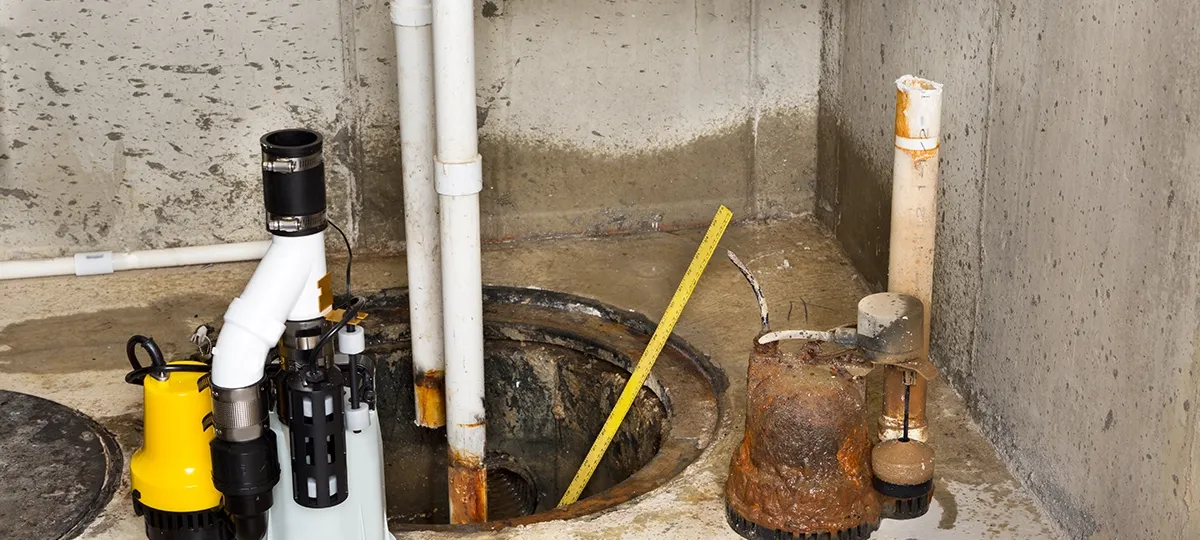
The sump pump vs sewage pump difference comes down to what each pump is designed to handle. A sump pump removes groundwater that collects around a home’s foundation. A sewage pump moves wastewater and solid waste from plumbing fixtures that cannot drain by gravity.
Choosing the wrong equipment can lead to clogs, backups, or inadequate drainage. However, not every home needs both systems. The correct choice depends on where water originates and how it must be discharged.
If your Gastonia home has a basement bathroom, laundry room, or other below-grade plumbing, the drainage layout determines whether pumping equipment is necessary. Fixtures that already drain by gravity may not require a pump.
At Superior Plumbing & Drains, we evaluate your home’s plumbing and drainage needs before recommending equipment. We’ll explain the differences and help you choose a system suited to the application.
Sump Pump vs Sewage Pump Difference: What to Know
A sump pump removes groundwater that collects in a basement or crawl space. A sewage pump moves wastewater from plumbing fixtures that cannot discharge into the sewer system by gravity.
Understanding how a sump pump works helps explain the distinction. Groundwater enters a sump basin through foundation drainage or surrounding soil. When the water reaches a preset level, the pump activates and sends it to an approved discharge location.
A sewage pump operates differently. It collects wastewater in a sealed basin and pumps that wastewater into the building’s sanitary drainage system. Depending on the equipment, sewage may pass through the pump intact or be ground into smaller particles.
Both systems use motors and impellers, but their components are designed for different materials and discharge requirements.
If a sump pump fails, groundwater may collect in your basement or crawl space. However, sewage pump failure can cause wastewater to back up through connected fixtures.
A sewage backup may also produce unpleasant odors. Persistent sewage smells in the house can indicate drain, venting, or sewer problems that need professional investigation.
The Centers for Disease Control and Prevention warns that contact with sewage-contaminated water can cause illness. Avoid contact with suspected sewage and arrange professional assistance if wastewater is entering your home.
When our licensed plumbers evaluate a drainage problem in Gastonia, we determine where the water originates and how the system is designed to remove it. This helps us recommend equipment that meets your home’s actual needs.
What Does Each Pump Handle?
The most important difference between a sump pump and a sewage pump is the type of water and debris each can safely move.
Sump pumps are designed primarily for groundwater and relatively clean drainage water. They commonly collect water from foundation drains, basement sump pits, and crawl spaces.
For example, a crawl space sump pump can remove groundwater that accumulates beneath a home. The pump moves water through a discharge line toward an approved drainage location.
Some sump pumps can tolerate small debris or suspended particles. However, their solids-handling capabilities vary, and they aren’t designed to transport human waste or toilet paper.
Sewage pumps handle wastewater from toilets and other plumbing fixtures when gravity drainage isn’t possible. They are built to accommodate larger solids and discharge wastewater into the sanitary drainage system.
Standard sewage ejector pumps generally use specially designed impellers that allow solids to pass through. Grinder pumps operate differently, cutting waste into smaller particles for pumping through appropriately designed discharge piping.
The International Code Council specifies that sewage ejectors serving toilets must meet solids-handling requirements. Under the cited model code, conventional toilet-serving ejectors generally accommodate solids up to two inches in diameter, with separate provisions for grinder systems.
Not all basement fixtures require a sewage pump. A sink, shower, or laundry fixture that cannot drain by gravity may use a properly rated wastewater or effluent pump, depending on the application and local code.
When evaluating a home’s drainage system, we consider the wastewater source, required flow rate, pumping height, and discharge piping.
This helps determine which pump can handle the application without unnecessary equipment or installation costs.
Design Differences That Matter
Although sump pumps and sewage pumps may look similar, their internal components and installation requirements can differ significantly.
A sump pump typically uses a submersible or pedestal design to remove water from a collection basin. Its impeller moves groundwater through a discharge pipe, while a float switch or other sensor controls when the motor operates.
The basin collects incoming water from the surrounding drainage system. Its construction depends on the installation and may include a solid bottom, perforations, or a separate drainage connection.
A sump pump check valve helps stop discharged water from flowing backward into the basin. Without proper backflow control, the pump may repeatedly remove the same water.
A sewage pump uses components designed to accommodate wastewater and solids. Standard sewage ejectors may use vortex or solids-handling impellers, while grinder systems incorporate cutting mechanisms.
The sewage basin must also meet applicable installation requirements. A sewage ejector pit is generally fitted with a gas-tight cover and appropriate plumbing venting to contain sewer gases.
Why the Wrong Pump Fails Fast
Using a pump outside its intended application can cause performance problems and unnecessary wear.
A conventional groundwater sump pump isn’t designed to move sewage. Toilet paper and other solids can obstruct its impeller or discharge piping, potentially causing clogs or equipment failure.
However, a sewage pump installed in a groundwater sump won’t automatically fail. Whether it operates correctly depends on its design, capacity, float controls, and installation conditions.
Problems can develop when the basin is too small, the pump is incorrectly sized, or the discharge system doesn’t match the application.
For example, a poorly configured system may start and stop too frequently. A high-water sump pump alarm can also indicate that water is collecting faster than the pump can remove it.
When inspecting an existing pump, our technicians evaluate its capacity, basin dimensions, switch operation, and discharge piping. We also verify that the equipment is appropriate for the material being pumped.
The right pump should match the required flow, pumping height, and solids-handling needs rather than simply fitting inside the existing basin.
Sump Pump vs Sewage Pump Difference at a Glance
| Feature | Sump Pump | Sewage Pump |
|---|---|---|
| Primary purpose | Removes groundwater | Removes sewage and wastewater |
| Water handled | Relatively clean drainage water | Wastewater containing solids |
| Typical location | Basement or crawl-space sump basin | Sealed sewage ejector basin |
| Solids handling | Limited; varies by model | Larger solids; depends on pump type |
| Upfront cost | Generally lower | Generally higher |
| Installation | Groundwater basin and discharge piping | Sealed basin, venting, sanitary discharge |
| Pump sizing | Flow rate and total dynamic head | Flow rate, total dynamic head, and solids capacity |
| Lifespan | Depends on usage and maintenance | Depends on usage and maintenance |
| Maintenance | Periodic testing, cleaning, and inspection | Periodic inspection of pump, controls, and basin |
| Best for | Foundation drainage and groundwater removal | Below-grade wastewater that cannot drain by gravity |
Let Us Match the Right Pump to Your Home
Choosing the right pump starts with understanding your home’s drainage needs. At Superior Plumbing & Drains, we help Gastonia homeowners select and install equipment designed for their specific plumbing systems.
Our licensed plumbers evaluate your existing pump, drainage layout, and installation requirements. Whether you need a sump pump for groundwater or a sewage ejector for below-grade plumbing, we’ll explain the available options and recommend an appropriate solution.
Understanding the sump pump vs sewage pump difference helps you make an informed decision before investing in new equipment. Our team can assess your system, identify necessary upgrades, and provide a detailed estimate before work begins.
We’re licensed and insured, and we stand behind our installations with a workmanship warranty. Contact Superior Plumbing & Drains to schedule a professional pump assessment in Gastonia, NC.
Frequently Asked Questions
Can you use a sump pump as a sewage pump?
No. A conventional groundwater sump pump isn’t designed to handle sewage or toilet waste. Solids can obstruct the impeller or discharge piping and damage the equipment. Plumbing fixtures that produce sewage require an appropriately rated pump or ejector system. Our plumbers can determine which equipment meets your home’s needs.
What is the main sump pump vs sewage pump difference?
The main difference is what each pump is designed to move. Sump pumps remove groundwater from basements and crawl spaces. Sewage pumps transport wastewater containing solids from plumbing fixtures that cannot drain by gravity. Their impellers, basins, and discharge requirements differ according to the application.
How do you know which pump your home needs?
If you’re managing groundwater around your foundation, a sump pump may be appropriate. If a toilet or other plumbing fixture sits below the gravity drainage connection, a sewage ejector or another approved wastewater pumping system may be necessary. Our plumbers assess your drainage layout and recommend the correct equipment.
Will a sewage pump work in a sump pit?
Some sewage pumps can physically move relatively clean water, but that doesn’t make them appropriate for every groundwater sump installation. Pump capacity, float controls, basin dimensions, and discharge requirements must match the application. An incorrectly sized system may cycle excessively or operate inefficiently. A licensed plumber can determine whether the existing pump is suitable.
More Solutions
Why you need our superior services
-
 Thank you to both Scott and Brendon. They did a great job taking care of my issue. In addition, they went the extra mile to ensure things were work as they should and planned a follow up the next day to ensure everything is still good. I’ve been using Superior Plumbing for over 8 years. I would highly recommend Tim and his team because they care about great customer satisfaction as well as the community!!
 -
When I needed a plumber due to a water issue at my home, Superior was the only company who not only responded with the quickest appointment time but called to let me know that due to a cancellation they were able to come even sooner. I especially appreciated the text message I received prior to the technician arriving, showing me his picture as well as his name. Walker, the technician, was professional, highly knowledgeable, and …Read All Reviews
-
Thank you Superior for such prompt, reasonable, professional service when we were without water. You are worthy of your name! We will be sharing our experience at Superior with friends that may need plumbing or well services in the future.
-
We discovered a slow water line leak in our home that was starting to damage our flooring so we needed help right away. I did not have prior experience with Superior Plumbing & Drains in the past, but reached out to them for help. They were able to schedule an appointment with me quickly. The responding Technician, Walker, was very professional and courteous and took the time to explain the problem and repair to …Read All Reviews
-
I had an emergency plumbing situation in my short-term rental & Superior Plumbing went above and beyond to help me out in a time pinch. The staff was KIND, HONEST, & thorough, without price gouging! I would HIGHLY recommend to anyone!
-
They were able to respond quickly when our water heater quit working. One of their plumbers came to the house, inspected heater, recommended replacement and explained clearly why he was recommending replacement. He then gave options of different prices and types of heaters. Once we made our choice they completed the work the next day. I would recommend this company without a question.


Superior Solutions for every drain In Charlotte, NC and surrounding areas.
We provide family-oriented plumbing solutions for all your needs in Charlotte, NC, and surrounding areas. From drain cleaning and plumbing repairs to water heaters, jetting, and filtration systems, our team is available 24/7 to assist you.
 For immediate service, call 7047656855.


Budget-friendly financing for your plumbing needs