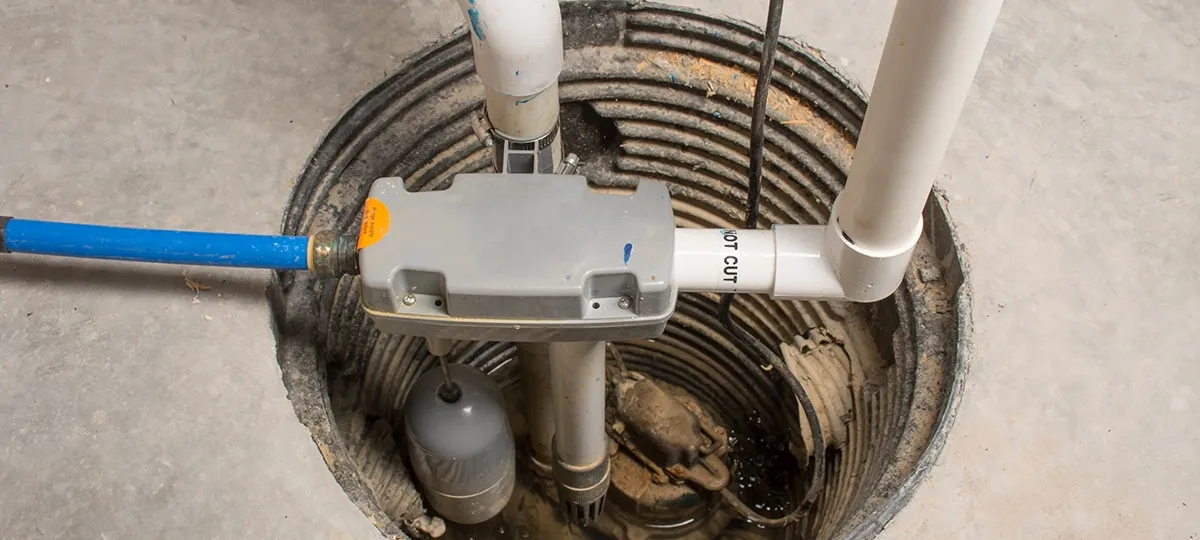
If you’ve ever wondered how does a sump pump work, you’re not alone. Maybe you’ve noticed your Gastonia basement stays dry after heavy rain while another home experiences flooding. A sump pump is one of those important systems homeowners rarely think about until something goes wrong.
A sump pump collects groundwater in a basin below the basement or crawl-space floor. As the water level rises, a switch activates the pump. The system then moves the water through a discharge pipe away from your foundation.
The Federal Emergency Management Agency (FEMA) identifies sump pumps as an option for managing basement groundwater and dampness. Proper installation and backup power can help reduce the risk of water accumulation during storms.
Understanding how does a sump pump work can help you recognize unusual cycling, drainage problems, and signs of equipment failure. We’ll explain the system’s main components, what activates the motor, and when a professional inspection makes sense.
How Does a Sump Pump Work?
A sump pump is a submersible or pedestal pump installed in a basin at a low point in your basement or crawl space. Its purpose is to remove groundwater that collects through foundation drainage systems or surrounding soil.
As water enters the basin, the level gradually rises. Once it reaches the switch’s activation point, the pump starts. A motor drives an impeller that moves water through the pump and into the discharge piping.
The discharge line carries water to an approved drainage location away from the foundation. Once the basin level drops to the switch’s shutoff point, the pump stops until more water enters.
The same basic process applies to a crawl space sump pump. These systems help manage groundwater beneath homes where moisture accumulates.
However, sump pump performance depends on more than the motor. The float switch, check valve, discharge piping, and basin must also function properly.
A stuck switch can prevent the pump from starting or shutting off. A blocked discharge line can reduce water removal, while a faulty check valve may allow discharged water to return to the basin.
When homeowners ask how does a sump pump work during heavy rainfall, we explain that the pump responds to water levels rather than weather conditions. Some pumps run frequently during storms, while others operate less often depending on groundwater inflow.
Our licensed plumbers inspect the system to determine whether its operation matches the property’s drainage needs. If the pump runs continuously, produces unusual noises, or fails to lower the basin level, professional attention may be necessary.
The Parts That Make a Sump Pump Run
Understanding how does a sump pump work starts with knowing the components responsible for collecting and removing groundwater.
The five main parts include:
- Sump basin. A pit or manufactured container that collects water entering through foundation drains or surrounding soil.
- Float switch or sensor. Activates the pump when water reaches a preset level and shuts it off after drainage.
- Motor. Supplies the mechanical power needed to operate the pump.
- Impeller. A rotating component that moves water through the pump housing and toward the discharge outlet.
- Discharge pipe. Carries pumped water away from the basin to an approved drainage location.
Many systems also include a sump pump check valve in the discharge line. This one-way valve helps stop water from flowing backward into the basin after the motor shuts off.
Without proper backflow control, water remaining in the discharge pipe may return to the pit and trigger additional pumping cycles.
The discharge location is equally important. According to the U.S. Environmental Protection Agency’s Indoor airPLUS guidance, sump drainage should be directed away from the foundation or into an approved stormwater system.
Discharging water too close to the home may allow it to reenter the surrounding soil and foundation drainage system.
When we inspect a sump pump, we check the basin for debris, verify switch operation, and listen for unusual motor noises. We also evaluate the impeller, check valve, and discharge piping for damage or restrictions.
If one component isn’t functioning correctly, the pump may run longer than necessary, cycle repeatedly, or struggle to remove water.
Our technicians identify the affected component before recommending repairs or replacement.
How Does a Sump Pump Know When to Turn On?
A sump pump uses an automatic switch or sensor to respond to rising water levels inside the basin.
The most common activation method is a float switch. As the water rises, the float moves upward. When it reaches a preset position, the switch activates the motor.
Once the pump lowers the water level sufficiently, the float returns to its shutoff position. The motor stops until the basin fills again.
Float switches come in several designs, including tethered and vertical configurations. Some pumps use electronic sensors or pressure-based controls instead.
Each design serves the same basic purpose: starting and stopping the pump at appropriate water levels.
However, the activation system can develop problems. A float may become caught against the basin wall or obstructed by debris. Electrical switch contacts can also deteriorate, while certain sensors may malfunction or become contaminated.
When homeowners ask how does a sump pump work when the float switch fails, the answer depends on the failure. A switch stuck in the off position may leave water rising without activating the pump. A switch stuck on may cause the motor to run continuously.
Sometimes, the pump activates correctly but cycles more frequently than expected. For example, a sump pump running every few minutes during dry weather may be responding to groundwater, check valve backflow, or incorrect switch settings.
Our technicians inspect the switch mechanism, observe water levels, and test pump operation. These checks help determine whether the problem involves the sensor, discharge system, or another component.
When to Call a Licensed Plumber for Your Sump Pump
Unusual noises, repeated cycling, and standing water are common reasons to have a sump pump inspected. Although some operating sounds are normal, significant changes may indicate mechanical or drainage problems.
For example, grinding or rattling may suggest debris inside the pump or worn mechanical components. A pump that runs continuously without lowering the water level may have a restricted discharge line, inadequate capacity, or a malfunctioning switch.
Likewise, a sump pump not turning on during heavy rain may have an electrical supply problem, stuck float, or failed motor.
If your sump pump alarm activates, the basin water level may have risen beyond its normal operating range. This deserves prompt attention, especially when water approaches the top of the basin.
What a Professional Sump Pump Inspection Includes
When we inspect sump pumps in Gastonia, our plumbers begin by examining the basin, switch, and available electrical connections.
Next, we observe the pump during operation. We check whether it starts at the correct water level, removes water effectively, and shuts off as intended.
We also evaluate the check valve and discharge piping for restrictions, damage, or backflow. If necessary, we assess basin dimensions and pump capacity.
Understanding how does a sump pump work under normal conditions helps us distinguish ordinary operation from a developing problem.
Once we’ve identified the cause, we explain whether an adjustment, component repair, or replacement is appropriate.
Schedule Sump Pump Service in Gastonia, NC
At Superior Plumbing & Drains, we help Gastonia homeowners keep their sump pump systems operating reliably. Whether your pump needs routine maintenance, troubleshooting, or replacement, our licensed plumbers can help.
We explain our findings, review your repair options, and provide a clear estimate before beginning work. Our team is licensed and insured, and we stand behind our services with a workmanship warranty.
Contact Superior Plumbing & Drains to schedule a professional sump pump inspection in Gastonia, NC.
Frequently Asked Questions
How does a sump pump work to keep my basement dry?
A sump pump collects groundwater in a basin beneath your basement or crawl-space floor. When water rises to a preset level, a switch activates the motor. The pump moves water through a discharge pipe away from the foundation. Once the water drops to the shutoff level, the pump stops.
Why does my sump pump run but my basement still floods?
The pump may be undersized, the discharge pipe could be blocked, or groundwater may be entering faster than the system can remove it. A faulty check valve can also allow water to return to the basin. Our plumbers inspect the system to identify the cause.
How often should a sump pump be inspected by a professional?
An annual professional inspection is a reasonable maintenance schedule for many residential systems. Pumps exposed to frequent operation or demanding groundwater conditions may need additional attention. We check the switch, basin, discharge piping, and overall pump performance to identify developing problems.
Can I hear if my sump pump isn’t working correctly?
Yes. Grinding, rattling, or unusually loud noises can indicate debris, damaged components, or mechanical wear. Continuous running or unusually frequent cycling may also warrant inspection. However, some pumps operate regularly during periods of high groundwater inflow without malfunctioning.
How does a sump pump work during a power outage?
A standard electric sump pump stops operating when household power is unavailable. A properly installed battery-powered backup or water-powered backup system, where suitable, may continue removing water. FEMA recommends considering battery-operated backup protection for sump pumps because storms can also cause power failures. Our plumbers can evaluate available backup options for your home.
More Solutions
Why you need our superior services
-
 Thank you to both Scott and Brendon. They did a great job taking care of my issue. In addition, they went the extra mile to ensure things were work as they should and planned a follow up the next day to ensure everything is still good. I’ve been using Superior Plumbing for over 8 years. I would highly recommend Tim and his team because they care about great customer satisfaction as well as the community!!
 -
When I needed a plumber due to a water issue at my home, Superior was the only company who not only responded with the quickest appointment time but called to let me know that due to a cancellation they were able to come even sooner. I especially appreciated the text message I received prior to the technician arriving, showing me his picture as well as his name. Walker, the technician, was professional, highly knowledgeable, and …Read All Reviews
-
Thank you Superior for such prompt, reasonable, professional service when we were without water. You are worthy of your name! We will be sharing our experience at Superior with friends that may need plumbing or well services in the future.
-
We discovered a slow water line leak in our home that was starting to damage our flooring so we needed help right away. I did not have prior experience with Superior Plumbing & Drains in the past, but reached out to them for help. They were able to schedule an appointment with me quickly. The responding Technician, Walker, was very professional and courteous and took the time to explain the problem and repair to …Read All Reviews
-
I had an emergency plumbing situation in my short-term rental & Superior Plumbing went above and beyond to help me out in a time pinch. The staff was KIND, HONEST, & thorough, without price gouging! I would HIGHLY recommend to anyone!
-
They were able to respond quickly when our water heater quit working. One of their plumbers came to the house, inspected heater, recommended replacement and explained clearly why he was recommending replacement. He then gave options of different prices and types of heaters. Once we made our choice they completed the work the next day. I would recommend this company without a question.


Superior Solutions for every drain In Charlotte, NC and surrounding areas.
We provide family-oriented plumbing solutions for all your needs in Charlotte, NC, and surrounding areas. From drain cleaning and plumbing repairs to water heaters, jetting, and filtration systems, our team is available 24/7 to assist you.
 For immediate service, call 7047656855.


Budget-friendly financing for your plumbing needs