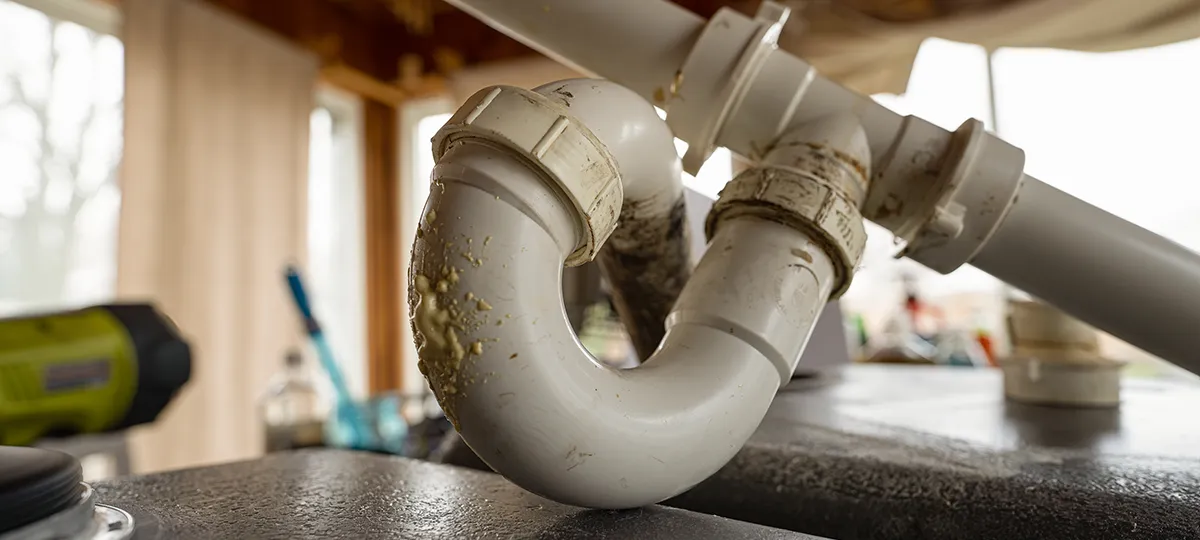
If you’ve noticed slow drains, gurgling sounds, or sewer odors creeping into your home this spring—when plumbing gets more use after a long winter—the culprit might be hiding beneath your sink. The difference between an s trap vs p trap can have a big impact on your home’s drainage performance and, more importantly, your family’s safety.
Both fixtures serve the same basic purpose of blocking sewer gases from entering your living space, only one meets modern plumbing standards in most areas. Older homes may still have S-traps installed, so many homeowners don’t realize they’re dealing with an outdated design that can lead to dry seals, nasty smells, and even health risks. That’s why we help homeowners understand what’s underneath their fixtures and when an upgrade is necessary.
What Are S-Traps and P-Traps?
If you’ve ever looked under your kitchen or bathroom sink, you’ve probably noticed a curved section of pipe that dips down before continuing on to the drain line. That bend isn’t just decorative—it’s called a trap, and it plays a critical role in protecting your home from sewer gases. The two most common types you’ll encounter are S-traps and P-traps. Understanding the difference between them can help you recognize potential problems before they affect your indoor air quality. A basic s trap vs p trap comparison starts with how each fixture drains and vents.
Both trap designs hold a small amount of water in that curved section. This creates a seal that blocks sewer gases from backing up into your living space. A P-trap gets its name from its shape when viewed from the side—it looks like the letter “P” lying on its back, with the curved portion sitting horizontally. An S-trap, on the other hand, resembles an “S” with the outlet extending downward through the floor.
Homeowners in the Gastonia and Monroe areas should know that S-traps are prone to siphonage. Negative pressure draws water out of the trap, which then allows sewer gases to enter homes. When you notice foul odors near drains, gurgling sounds, or unusually slow drainage, the issue may involve trap configuration or other drain problems. For related warning signs, Superior Plumbing and Drains explains what homeowners should know about clogged drain problems. A professional inspection can determine whether your trap configuration is the underlying cause.
S Trap vs P Trap: Code Compliance and Safety
Here’s the most important thing we tell homeowners in Gastonia: S-traps are no longer legal in modern plumbing installations. While both traps are designed to hold a water seal that blocks sewer gases from entering your home, S-traps have a critical flaw. Without proper venting, they are prone to siphoning—when water rushes down the drain, it can pull the entire trap seal with it. This leaves your home exposed to dangerous gases and foul odors.
The North Carolina Office of State Fire Marshal maintains the state’s current North Carolina plumbing code references, which is why older trap setups should be checked against today’s requirements. P-traps incorporate a vented pipe that prevents suction. This ensures the water seal remains intact and complies with modern building codes. The horizontal outlet connects to a vent stack, equalizing air pressure so water stays where it belongs.
When we inspect older homes, we often find S-traps still in use under sinks and fixtures installed decades ago. If you notice intermittent sewer smells, gurgling drains, or slow drainage, an improperly vented S-trap could be the culprit. We can assess your drain configuration and confirm whether your trap meets current code requirements. Plus, we’ll recommend the appropriate corrections to protect your home’s air quality and safety.
Performance Differences: How Each Trap Works
The way water seals function in an s trap vs p trap setup makes all the difference when it comes to reliable performance. A P-trap maintains its water seal more consistently because it vents horizontally through the wall. This allows air to enter the drain system at a controlled point. As a result, it prevents the siphoning action that can strip away the protective water barrier. When we inspect P-trap installations in Gastonia homes, we typically find stable water levels that keep sewer gases exactly where they belong—in the drain lines, not your living space.
S-traps, on the other hand, are vulnerable to a phenomenon called self-siphoning. The trap outlet drops straight down without proper venting, so water flowing through the trap can create suction. This suction is strong enough to pull the seal right out of the curve. Once that happens, you’re left with a direct path for sewer gas, foul odors, and even drain flies to enter your home. The Occupational Safety and Health Administration explains that hydrogen sulfide exposure can cause a wide range of health effects, so persistent drain odors should never be ignored.
Homeowners often notice gurgling sounds, slow drainage, persistent bathroom odors, or toilet flushing problems before they realize their trap has lost its seal. We can evaluate your drain configuration and measure vent distances. This helps us determine whether your existing trap design meets current plumbing standards—or whether an upgrade would protect your home’s air quality and comfort.
S-Trap vs P-Trap: Key Differences at a Glance
When we inspect drains in Gastonia homes, the distinction between an S-trap and a P-trap is immediately visible. When comparing s trap vs p trap designs, the easiest difference to spot is where the drain pipe exits. It matters for code compliance and proper venting. An S-trap connects directly from the fixture drain into the floor, forming an “S” shape without a vent connection. A P-trap, by contrast, exits horizontally into the wall. It connects to a properly vented drain line, creating a “P” shape when viewed from the side.
The critical difference is venting. P-traps integrate with vent stacks that equalize air pressure, which keeps the water seal intact. S-traps lack this safeguard, making them prone to siphoning—where water gets pulled out of the trap. This allows sewer gas into your home. We also see S-traps struggle with slow drainage, gurgling sounds, and persistent odors that no amount of cleaning can fix. Most modern plumbing codes prohibit new S-trap installations for these exact reasons.
If you notice foul smells near sinks or hear unusual drainage noises, the trap configuration may be the culprit. We can evaluate your existing setup and determine whether an S-trap upgrade is needed. Our team will bring your plumbing up to current standards. Call us at Superior Plumbing and Drains for a thorough inspection—we’ll diagnose the issue and recommend the safest solution for your home.
When to Replace an S-Trap with a P-Trap
If you’re experiencing persistent sewer odors in your home, especially near sinks, your S-trap may have lost its water seal. This is one of the clearest signs that replacement is overdue. Other warning indicators include slow drainage despite clearing visible clogs, gurgling sounds from the drain, or frequent backups that keep recurring. These symptoms often point to the siphoning problem inherent in S-trap design. Water gets pulled out of the trap and leaves your home vulnerable to sewer gases. In many cases, an s trap vs p trap inspection can explain why odors keep returning after the drain has been cleaned.
Kitchen or bathroom remodeling projects present the ideal opportunity to upgrade from an S-trap to a P-trap. When walls are already open and plumbing is exposed, making this code-compliant upgrade becomes significantly more straightforward. We also recommend replacement if you’re selling your home. Many inspectors flag S-traps during a home plumbing inspection because they are outdated and may not meet current standards in NC.
We can assess your existing trap configuration and determine whether replacement is necessary. Our team will evaluate your drainage system, check for proper venting, and ensure any new P-trap installation meets all current plumbing standards. If you’ve noticed any of these warning signs or you’re planning renovation work, give us a call for a professional inspection.
Let Our Team Handle Your Trap Installation
Whether you’ve discovered that your home has an outdated S-trap or you’re planning new plumbing work in the Gastonia and Monroe areas, we’re here to ensure your drainage system meets current code requirements. It will function reliably for years to come. Our technicians assess your existing plumbing configuration and identify any code violations or performance issues. Then we recommend the most practical solution for your specific situation.
When homeowners ask about s trap vs p trap replacement, we look at venting, drain layout, fixture location, and current North Carolina plumbing standards. We handle everything from accessing concealed pipes to properly venting P-traps according to North Carolina plumbing standards. Our s trap vs p trap replacement recommendations focus on safe venting, reliable drainage, and code-compliant installation.
Investing in code-compliant trap replacement now protects you from costly callbacks, water damage from sewer gas corrosion, and potential complications during home inspections or sales. A properly installed P-trap with correct venting maintains your home’s value. It also eliminates the recurring headaches that come with an improper setup. When you address trap issues correctly today, you’re avoiding expensive emergency situations tomorrow—and that’s smart homeownership.
If you’re dealing with slow drains, sewer odors, or you simply want to confirm your plumbing meets code, we’re ready to help. Contact our drain specialists today, and we’ll point you in the right direction with expert guidance tailored to your home’s unique needs.
Frequently Asked Questions
What is the main difference between an s trap vs p trap setup?
The main difference is how each one vents. A P-trap exits horizontally into the wall and connects to a vent stack, keeping the water seal intact. An S-trap drains straight down through the floor without proper venting. This makes it prone to siphoning and allows sewer gases into your home. That’s why P-traps meet code while S-traps don’t.
Why are S-traps no longer allowed in modern plumbing?
S-traps lack proper venting, causing them to siphon water out of the trap seal. Once that seal disappears, sewer gases, foul odors, and drain pests can enter your home. P-traps solve this by incorporating a vented horizontal outlet. This equalizes air pressure and keeps the protective water barrier in place consistently.
How do I know if I have an S-trap or P-trap under my sink?
If the drain pipe exits horizontally into the wall, you have a P-trap. If it drops straight down through the floor forming an “S” shape, you have an S-trap. We can inspect your drain configuration and determine whether your trap meets current code standards in Gastonia NC.
What are signs that my S-trap needs to be replaced with a P-trap?
Common warning signs include persistent sewer odors near sinks, gurgling sounds when water drains, slow drainage despite no clogs, and frequent backups. These symptoms mean your S-trap has lost its water seal due to siphoning. We can assess your system and recommend code-compliant replacement. This will restore proper function and eliminate odors.
Can an s trap vs p trap problem cause sewer smells?
Yes. An S-trap can lose its water seal when water siphons out of the bend. Once that seal is gone, sewer gases can move back through the drain. A properly vented P-trap helps prevent that problem by keeping the water barrier in place.
More Solutions
Why you need our superior services
-
 Thank you to both Scott and Brendon. They did a great job taking care of my issue. In addition, they went the extra mile to ensure things were work as they should and planned a follow up the next day to ensure everything is still good. I’ve been using Superior Plumbing for over 8 years. I would highly recommend Tim and his team because they care about great customer satisfaction as well as the community!!
 -
When I needed a plumber due to a water issue at my home, Superior was the only company who not only responded with the quickest appointment time but called to let me know that due to a cancellation they were able to come even sooner. I especially appreciated the text message I received prior to the technician arriving, showing me his picture as well as his name. Walker, the technician, was professional, highly knowledgeable, and …Read All Reviews
-
Thank you Superior for such prompt, reasonable, professional service when we were without water. You are worthy of your name! We will be sharing our experience at Superior with friends that may need plumbing or well services in the future.
-
We discovered a slow water line leak in our home that was starting to damage our flooring so we needed help right away. I did not have prior experience with Superior Plumbing & Drains in the past, but reached out to them for help. They were able to schedule an appointment with me quickly. The responding Technician, Walker, was very professional and courteous and took the time to explain the problem and repair to …Read All Reviews
-
I had an emergency plumbing situation in my short-term rental & Superior Plumbing went above and beyond to help me out in a time pinch. The staff was KIND, HONEST, & thorough, without price gouging! I would HIGHLY recommend to anyone!
-
They were able to respond quickly when our water heater quit working. One of their plumbers came to the house, inspected heater, recommended replacement and explained clearly why he was recommending replacement. He then gave options of different prices and types of heaters. Once we made our choice they completed the work the next day. I would recommend this company without a question.


Superior Solutions for every drain In Charlotte, NC and surrounding areas.
We provide family-oriented plumbing solutions for all your needs in Charlotte, NC, and surrounding areas. From drain cleaning and plumbing repairs to water heaters, jetting, and filtration systems, our team is available 24/7 to assist you.
 For immediate service, call (980) 372-7151.


Budget-friendly financing for your plumbing needs