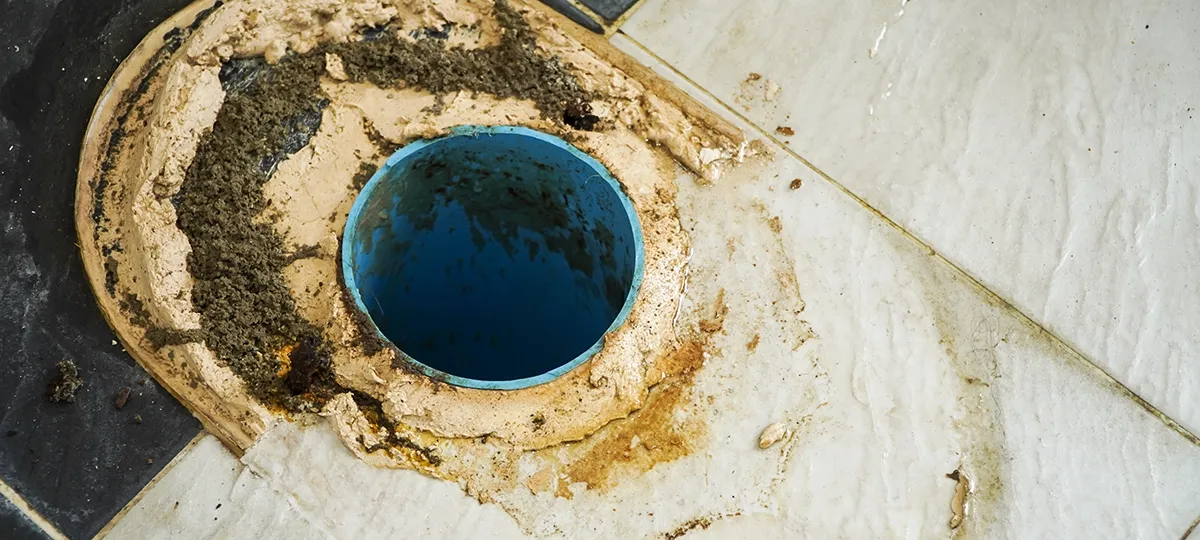
When a toilet wobbles, leaks at the base, or sits too close to a wall, the problem may begin beneath the fixture. In some bathrooms, the drainpipe does not line up with the position where the toilet needs to sit. An offset toilet flange can correct a small alignment problem without requiring extensive changes to the bathroom floor or drain line.
This specialized fitting shifts the toilet’s connection slightly while maintaining a secure path to the waste pipe. However, it must be selected and positioned carefully. The wrong flange, incorrect height, or poor anchoring can leave the toilet unstable and compromise the seal beneath it.
What Is an Offset Toilet Flange?
An offset toilet flange is a plumbing fitting that connects a toilet to a drainpipe when the two openings are not perfectly aligned. Unlike a standard flange, its opening is positioned off-center. This design allows the toilet to shift a short distance forward, backward, or sideways while remaining connected to the existing drain.
The flange also anchors the toilet to the floor and supports the seal between the toilet outlet and drainpipe. Because it affects alignment, drainage, and stability, it is more than a simple mounting ring.
An offset design is intended for relatively small adjustments. If the drain is significantly misplaced, damaged, or improperly sloped, rerouting part of the drain line may provide a safer long-term solution.
When You Need an Offset Toilet Flange
You may need an offset toilet flange when the toilet cannot sit in the correct position over the existing drain. This often becomes apparent when a replacement toilet has a different footprint or when an older bathroom has an unusual rough-in measurement.
Common situations include:
- The drainpipe sits too close to a wall, tub, or vanity.
- The toilet cannot be centered properly in the available space.
- A floor joist or other obstruction affected the original drain placement.
- A bathroom remodel changed the toilet’s intended position.
- The bowl does not align with the existing flange and mounting bolts.
A change in flooring height alone does not always require an offset design. In that situation, a flange spacer or height correction may be more appropriate. Homeowners changing the layout of their bathroom should have the plumbing evaluated before moving the toilet or purchasing new fixtures.
A plumber should measure the rough-in, inspect the existing flange, and evaluate the drainpipe before recommending an offset toilet flange. This helps determine whether a minor adjustment will solve the problem or whether the drain itself needs to be moved.
Types of Offset Toilet Flange Designs
Offset flanges are available in several materials and configurations. The correct choice depends on the existing drainpipe, the direction of the required adjustment, the finished-floor height, and the amount of clearance available beneath the toilet.
PVC and ABS offset flanges are commonly used with matching plastic drainage systems. Some include a fixed off-center opening, while others have adjustable rings that help align the closet bolts after the fitting is positioned. Metal-ring designs provide additional support around the mounting area and may resist cracking better than an all-plastic ring.
Cast-iron plumbing may require a flange or adapter designed specifically for that pipe material. A plumber must also confirm that the fitting will create a secure connection without narrowing or obstructing the waste path.
An offset toilet flange should provide only the amount of movement needed. Choosing a larger offset than necessary can create avoidable installation challenges, while an undersized fitting may still leave the toilet too close to a wall or unable to sit squarely on the floor.
Offset Toilet Flange Installation Challenges
Installing an offset toilet flange requires more than positioning it over the drain. The plumber must account for the exact rough-in measurement, the direction of the offset, the finished-floor height, and the location of the toilet’s mounting bolts.
The flange must also be securely anchored to a solid subfloor. If the surrounding wood is soft, damaged, or uneven, the toilet may continue to rock even after the new flange is installed. Any weakened flooring should be addressed before resetting the fixture.
Flange height is another important consideration. A flange that sits too low may not compress the wax ring properly, while one that sits too high can keep the toilet from resting evenly on the floor. In addition, the shifted connection must maintain an open and properly directed drain path.
According to the International Code Council’s North Carolina Plumbing Code requirements for floor drainage connections, floor-outlet plumbing fixtures must connect to the drain with a floor flange, and the joint must be properly sealed. This requirement reinforces the importance of using compatible components and creating a secure connection.
Before permanently securing an offset toilet flange, the plumber should verify that:
- The toilet has adequate clearance from walls and nearby fixtures.
- The bowl sits squarely in its intended position.
- The flange is supported and anchored properly.
- The closet bolts align with the toilet base.
- The drain connection remains unobstructed.
If these conditions cannot be met, modifying the drain line may be more dependable than forcing an offset fitting into an unsuitable layout.
Signs an Offset Toilet Flange Needs Replacement
An offset toilet flange can crack, corrode, loosen, or pull away from the subfloor over time. One of the clearest warning signs is a toilet that rocks even after the mounting bolts have been checked. Movement can weaken the wax-ring seal and allow water to escape during flushing.
Moisture collecting around the bottom of the bowl is another warning sign. However, the water may also come from condensation, a loose supply connection, or another toilet component. The source should be confirmed before the toilet is removed or the wax ring is replaced.
Other signs of flange trouble include:
- Persistent sewer odors near the toilet
- Rusted or broken mounting hardware
- Soft or discolored flooring around the bowl
- A toilet that repeatedly shifts out of position
- Recurring wax-ring failure
- Visible cracks after the toilet is removed
Replacing only the wax ring may not solve the problem when the flange itself is broken or unstable. A plumber should inspect the fitting, drain connection, mounting hardware, and surrounding floor before deciding which components need replacement.
Professional Offset Toilet Flange Service
When you call Superior Plumbing and Drains, our plumbers begin by inspecting the toilet’s position, drain alignment, flange condition, and surrounding floor. We measure the existing rough-in and determine how far the toilet must move to achieve proper clearance.
If an offset toilet flange is appropriate, we select a fitting compatible with the existing drain material and required adjustment. We then remove the toilet and damaged hardware, prepare the drain opening, secure the new flange, and install a new seal before resetting the fixture.
After installation, we verify that the toilet sits firmly without rocking. We also flush and test it for leaks around the base and drain connection. If the drain is too far out of position or has additional damage, we will explain why modifying the pipe may offer a better result than installing an offset fitting.
Superior Plumbing and Drains provides professional toilet repair service for flange failures, leaking toilet bases, unstable fixtures, and other installation problems. Contact our team to schedule an inspection and determine whether an offset toilet flange is the right solution for your bathroom in Gastonia, Monroe, and the surrounding areas.
Frequently Asked Questions
Can you install a toilet with an offset flange on any type of flooring?
Yes, an offset toilet flange can be installed on most flooring types—tile, vinyl, laminate, or hardwood. However, the subfloor must be solid, flat, and structurally sound. If the floor around your drain has water damage, rot, or excessive flex, we’ll need to reinforce or replace the damaged area first. This prevents leaks or rocking over time.
How much can an offset toilet flange shift the toilet position?
An offset toilet flange typically shifts the mounting position up to two inches in any direction from the original drain centerline. The exact distance depends on the flange design. Some models offer one inch while others reach the full two-inch maximum. Our technicians measure the gap and recommend the correct offset flange for your situation.
What causes an offset flange to fail or leak over time?
An offset flange usually fails because of improper installation height, uneven subfloor support, or normal wear on the wax ring seal beneath the toilet. Over-tightening the closet bolts, floor movement from settling, and corrosion on metal flanges also weaken the connection. Our team inspects the flange, subfloor, and drain connection to replace any damaged components correctly.
Should I replace just the flange or the entire toilet drain assembly?
If the offset is minor and the drain pipe is sound, replacing only the flange is usually sufficient. However, if the pipe itself has cracks, heavy corrosion, or an angle that violates code, rerouting part of the drain may be the safer long-term fix. Call us for an inspection—we’ll diagnose the root cause and recommend the most reliable solution.
More Solutions
Why you need our superior services
-
 Thank you to both Scott and Brendon. They did a great job taking care of my issue. In addition, they went the extra mile to ensure things were work as they should and planned a follow up the next day to ensure everything is still good. I’ve been using Superior Plumbing for over 8 years. I would highly recommend Tim and his team because they care about great customer satisfaction as well as the community!!
 -
When I needed a plumber due to a water issue at my home, Superior was the only company who not only responded with the quickest appointment time but called to let me know that due to a cancellation they were able to come even sooner. I especially appreciated the text message I received prior to the technician arriving, showing me his picture as well as his name. Walker, the technician, was professional, highly knowledgeable, and …Read All Reviews
-
Thank you Superior for such prompt, reasonable, professional service when we were without water. You are worthy of your name! We will be sharing our experience at Superior with friends that may need plumbing or well services in the future.
-
We discovered a slow water line leak in our home that was starting to damage our flooring so we needed help right away. I did not have prior experience with Superior Plumbing & Drains in the past, but reached out to them for help. They were able to schedule an appointment with me quickly. The responding Technician, Walker, was very professional and courteous and took the time to explain the problem and repair to …Read All Reviews
-
I had an emergency plumbing situation in my short-term rental & Superior Plumbing went above and beyond to help me out in a time pinch. The staff was KIND, HONEST, & thorough, without price gouging! I would HIGHLY recommend to anyone!
-
They were able to respond quickly when our water heater quit working. One of their plumbers came to the house, inspected heater, recommended replacement and explained clearly why he was recommending replacement. He then gave options of different prices and types of heaters. Once we made our choice they completed the work the next day. I would recommend this company without a question.


Superior Solutions for every drain In Charlotte, NC and surrounding areas.
We provide family-oriented plumbing solutions for all your needs in Charlotte, NC, and surrounding areas. From drain cleaning and plumbing repairs to water heaters, jetting, and filtration systems, our team is available 24/7 to assist you.
 For immediate service, call (980) 372-7151.


Budget-friendly financing for your plumbing needs