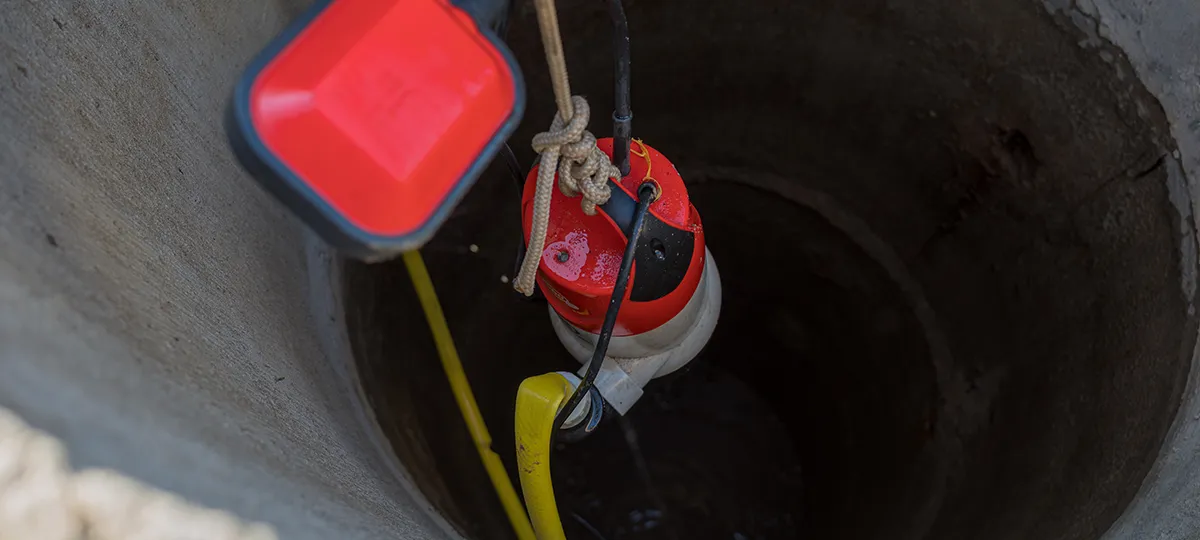
If your home relies on a private well, you may wonder, how does well water work from the ground to your faucet? Unlike a municipal system, a private well brings groundwater directly onto your property. A pump moves that water into your home, while other components maintain pressure and manage water quality. At Superior Plumbing & Drains, we help homeowners in Gastonia, Charlotte, Monroe, and surrounding areas understand and maintain these systems. Once you know how each part works, plumbing and pressure problems become much easier to recognize.
How Does Well Water Work Below Ground?
A private well begins with groundwater beneath the surface.
Rain and other precipitation soak into the soil. Then, some of that water moves deeper through soil and rock. Eventually, it collects within underground formations that hold groundwater.
A well provides access to that groundwater.
Depending on the property, the well may be dug, driven, or drilled. However, drilled wells are common for residential systems.
The EPA explains that well casing helps protect the well from dirt and excess water. A well cap also helps keep debris, insects, and small animals from entering.
The well casing helps maintain the opening and separates the well from surrounding soil. Meanwhile, the well cap helps keep debris and small animals from entering.
A screen may also help limit the amount of sediment entering the system.
Therefore, the well itself does more than simply create a hole in the ground. It provides a protected pathway between the groundwater supply and your plumbing system.
The Well Pump Moves Water Toward Your Home
How Does Well Water Work With a Pressure Tank?
Understanding the pressure tank helps answer another important part of how does well water work.
The pressure tank stores water under pressure after the pump brings it from the well.
Inside the tank, water and compressed air work together. The compressed air creates pressure that pushes water through your plumbing when you open a fixture.
A pressure switch helps control the process.
As you use water, system pressure gradually falls. Once pressure reaches a preset lower level, the pressure switch tells the pump to start.
The pump then supplies more water and restores pressure.
Once the system reaches its upper pressure setting, the pump shuts off again.
As a result, the pump does not need to start every time someone briefly turns on a faucet.
However, problems with the tank or pressure switch can disrupt that cycle. For example, the pump may begin turning on and off too frequently.
You may also notice inconsistent flow throughout the home.
If you experience persistent low water pressure in your house, the pump, pressure tank, filter, plumbing, or another component may need inspection.
Water Treatment Can Happen Before the Faucet
Water coming from a well is not automatically treated like municipal drinking water.
In fact, private well owners are responsible for monitoring their own water quality.
The treatment needed depends on what is actually present in the water. Therefore, testing should guide treatment decisions rather than guesswork.
Some homes may use a sediment filter to remove suspended particles. Meanwhile, other systems may need equipment for hardness, iron, odors, or specific contaminants.
For example, well water containing excessive iron may leave reddish stains on fixtures or create metallic tastes. Depending on the test results, an iron filter for well water may help address the problem.
Hard water may require a water softener instead.
Additionally, some households use other filtration or treatment systems based on their water quality.
Whatever equipment is installed, proper water filtration maintenance helps keep the system working as intended.
How Does Well Water Work When You Open a Faucet?
So, how does well water work at the moment you turn on the kitchen faucet?
The process happens quickly.
First, opening the faucet creates demand within the plumbing system. Pressurized water stored in the pressure tank begins moving through the pipes.
As water leaves the tank, system pressure falls.
If enough water is used, the pressure reaches the pump’s activation point. Then, the pressure switch turns the pump on.
The pump pulls more groundwater from the well and sends it toward the house.
If treatment equipment is installed, water passes through those components as needed. Afterward, it moves through the home’s plumbing lines.
Finally, the water reaches your faucet, shower, toilet, washing machine, or other fixture.
Once demand stops and pressure is restored, the pump shuts off.
Therefore, several components can work together every time you use even a small amount of water.
What Can Go Wrong With a Well Water System?
Because several components work together, different problems can create similar symptoms.
Low pressure, for example, does not automatically mean the well is running dry.
A clogged filter could restrict water flow. Likewise, the pressure tank could have a problem.
The pump may also be wearing out. Additionally, a leaking pipe can reduce pressure before water reaches your fixtures.
Sediment can create other problems.
Over time, sediment may clog filters, fixtures, or treatment equipment. As a result, water pressure may gradually become weaker.
Changes in water color, taste, or odor can also indicate a water-quality issue. However, appearance alone cannot tell you whether the water is safe.
Therefore, testing is especially important when something changes unexpectedly.
Maintaining a Private Well and Water System
Private well maintenance involves both the well itself and the equipment that carries water into your home.
First, pay attention to changes in pressure or flow. A sudden change often provides an early warning that something is wrong.
You should also watch for unusual pump behavior.
For example, frequent starting and stopping may indicate a pressure tank or pressure switch problem. Meanwhile, unusual noises may point toward pump or mechanical issues.
Water testing is important too.
The CDC recommends testing private well water at least once each year for total coliform bacteria, nitrates, total dissolved solids, and pH. Additional testing may be appropriate if the water’s taste, color, or smell changes.
Additionally, test the water if you notice a significant change in taste, smell, or appearance.
Regular attention can help you catch small problems before they interrupt your water supply.
How Does Well Water Work for Local Homes?
For homeowners asking how does well water work, the basic process remains consistent.
Groundwater enters the well. Then, the pump moves it toward the house.
The pressure tank maintains usable water pressure. After that, filtration or treatment equipment may condition the water before it reaches household plumbing.
However, every property is different.
Well depth, pump type, household demand, water chemistry, and plumbing design can all affect system performance.
That is why we look at the complete system when diagnosing a water problem.
At Superior Plumbing & Drains, we serve homeowners throughout Gastonia, Charlotte, Monroe, and surrounding communities. We can identify problems involving well pumps, pressure, plumbing, and water treatment equipment.
Understanding the system is helpful. However, you should not have to guess when your water supply starts acting differently.
If your home has weak pressure, inconsistent flow, unusual water quality, or another well-water concern, contact us today. We can inspect the system, determine what is causing the problem, and explain your repair or treatment options.
Frequently Asked Questions
How does well water work?
A well accesses groundwater below your property. A pump moves the water toward your home, while a pressure tank maintains water pressure. The water may also pass through filtration or treatment equipment before reaching your faucets.
Does a well pump run every time you turn on a faucet?
Not necessarily. The pressure tank supplies stored pressurized water first. Once system pressure falls to a preset level, the pressure switch activates the well pump to restore the water supply and pressure.
Does well water need to be filtered?
Not every well requires the same treatment. Water testing should determine whether filtration, softening, iron removal, or another treatment method is appropriate for the home’s water supply.
Why does my well water pressure suddenly drop?
Low pressure can result from a failing pump, pressure tank problems, clogged filters, sediment buildup, plumbing leaks, or pressure-switch issues. A professional inspection can identify the specific cause.
More Solutions
Why you need our superior services
-
 Thank you to both Scott and Brendon. They did a great job taking care of my issue. In addition, they went the extra mile to ensure things were work as they should and planned a follow up the next day to ensure everything is still good. I’ve been using Superior Plumbing for over 8 years. I would highly recommend Tim and his team because they care about great customer satisfaction as well as the community!!
 -
When I needed a plumber due to a water issue at my home, Superior was the only company who not only responded with the quickest appointment time but called to let me know that due to a cancellation they were able to come even sooner. I especially appreciated the text message I received prior to the technician arriving, showing me his picture as well as his name. Walker, the technician, was professional, highly knowledgeable, and …Read All Reviews
-
Thank you Superior for such prompt, reasonable, professional service when we were without water. You are worthy of your name! We will be sharing our experience at Superior with friends that may need plumbing or well services in the future.
-
We discovered a slow water line leak in our home that was starting to damage our flooring so we needed help right away. I did not have prior experience with Superior Plumbing & Drains in the past, but reached out to them for help. They were able to schedule an appointment with me quickly. The responding Technician, Walker, was very professional and courteous and took the time to explain the problem and repair to …Read All Reviews
-
I had an emergency plumbing situation in my short-term rental & Superior Plumbing went above and beyond to help me out in a time pinch. The staff was KIND, HONEST, & thorough, without price gouging! I would HIGHLY recommend to anyone!
-
They were able to respond quickly when our water heater quit working. One of their plumbers came to the house, inspected heater, recommended replacement and explained clearly why he was recommending replacement. He then gave options of different prices and types of heaters. Once we made our choice they completed the work the next day. I would recommend this company without a question.


Superior Solutions for every drain In Charlotte, NC and surrounding areas.
We provide family-oriented plumbing solutions for all your needs in Charlotte, NC, and surrounding areas. From drain cleaning and plumbing repairs to water heaters, jetting, and filtration systems, our team is available 24/7 to assist you.
 For immediate service, call (980) 372-7151.


Budget-friendly financing for your plumbing needs